Claude Has Character. Your AI Has a Script.
For thirty years we've known that scripts fail under pressure and principles don't. We applied this to people. We forgot to apply it to machines.
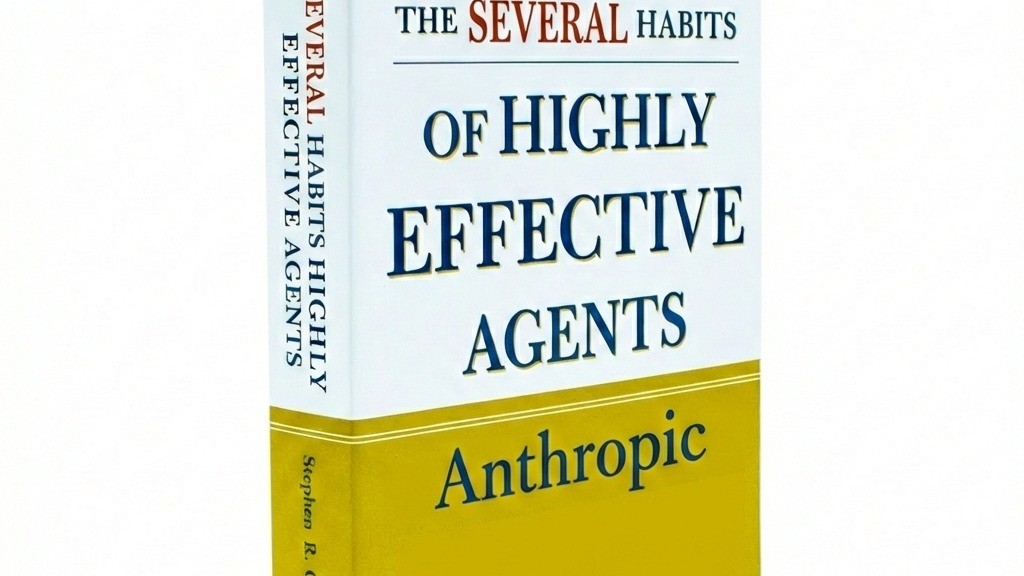
For thirty years we’ve known that scripts fail under pressure and principles don’t. We applied this to people. We forgot to apply it to machines. Anthropic just remembered.
You already know the difference between a principled employee and a scripted one. You promote the first. You manage the second. You call the first at two in the morning when the playbook has no relevant page, because she reasons from principles when procedures run out.
You have never once applied this standard to a machine. Neither has your industry.
For three decades, we have operated on a simple insight about people: techniques collapse under pressure, but principles hold. Stephen Covey drew the line in 1989. On one side, the Personality Ethic: scripts, impression management, borrowed behaviours that shatter the moment circumstances outrun preparation. On the other, the Character Ethic: principles internalized so deeply they become reflexive. Not “what should I say?” but “what does integrity require?”
Every leadership framework since has reinforced the distinction. And then we built the most consequential technology of the century and dressed it entirely in borrowed clothing.
The Script Factory
The AI industry built its safety architecture on scripts. Nobody used that word, but the structure is unmistakable.
“Do not discuss topic X.” “Refuse all requests in category Y.” “Block any output containing keyword Z.”
These are dinner party instructions: effective when the conversation stays predictable, useless the moment it doesn’t, actively dangerous when the gap between anticipation and reality becomes a chasm. And the gap always becomes a chasm. That is what reality does to scripts.
Here is the paradox the industry still hasn’t absorbed: the more rules they added, the less safe their systems became. More restrictions produced more brittleness, more workarounds, and a growing population of users driven toward completely unguarded alternatives because the guarded ones refused to help with legitimate work. The wall did not contain the danger. It redirected it.
More technique does not produce more character. More rules do not produce more judgment. You can dress a system in every safety script ever written and it will still fail the moment it encounters a situation the scripts did not anticipate. Which is every situation that actually matters.
The Problem Is How You See the Problem
Two paradigms. They are not two versions of the same idea. They are opposites.
The old paradigm: AI safety means deciding what to prohibit. Danger lives in categories of knowledge. Build a wall around enough categories and the system becomes safe.
The new paradigm: AI safety means deciding how to reason. Danger lives in the application of knowledge, not in the knowledge itself. A principle that evaluates intent, context, and consequence handles situations no wall anticipated, because the principle does not need to anticipate them. It reasons through them.
Consider what this means concretely. A penetration tester needs to understand how attacks work. This is not a side effect of her profession; it is her profession. A scripted AI checks the blacklist. “Vulnerability exploitation” appears on the list. Request refused. The script cannot ask why. It can only ask what.
So the tester turns to a model with no safety reasoning at all. The “safe” AI, by refusing the defender, has funnelled a professional toward an unsafe tool. Refusal is not the same thing as safety, any more than silence is the same thing as wisdom.
A principle-based system asks different questions entirely. What is this person trying to accomplish? Is the intent defensive or offensive? Does the context suggest someone building shields or building weapons? The tester gets help building better defences because the system can distinguish between learning to attack and learning to defend. The blacklist never could. It was not designed to think. It was designed to refuse.
Inside-Out
There is a reason lasting change begins with principles, not constraints. You do not become trustworthy by memorizing the behaviours of trustworthy people. You become trustworthy by internalizing the principles that produce those behaviours. The behaviours follow. The reverse never works.
This is why Constitutional AI matters. It is inside-out alignment.
On January 22, 2026, Anthropic published Claude’s Constitution: eighty-four pages describing not what Claude is forbidden to do, but how Claude reasons about what to do. Not a compliance document. A philosophical framework. Principles for evaluating competing obligations, for holding tensions that cannot be cleanly resolved, for determining when helpfulness and safety are allies and when they appear to conflict.
The word “constitutional” is precise. A constitution is not a rulebook. A rulebook tells you what to do in anticipated situations. A constitution provides principles for reasoning through situations nobody anticipated when the document was written. The American Constitution contains no rule about internet speech. It contains a principle about expression that courts apply to circumstances the framers could not have imagined. That is what principles do: they outlive every situation they were not written for.
Dissolving the False Tradeoff
Scripts create a false tradeoff. If safety means prohibition, then more safety means more prohibition, which means less help. The industry accepted this as an iron law: safe or helpful, pick one.
Constitutional AI dissolves it. Not by ignoring safety, but by redefining it. Safety is not what you prohibit. Safety is how well you reason. An AI that reasons well is simultaneously more helpful and more safe, because good reasoning serves both.
The nurse practitioner asking about an unusual medication interaction does not get a terms-of-service disclaimer. She gets a response that holds two obligations at once: be genuinely useful to a medical professional, and flag the specific dangers that apply to her specific case. The scripted system can do neither, because blacklists do not improvise. The principled system can do both, because principles were built to.
The old ethic always forces a false choice: effectiveness or integrity. The new ethic dissolves it. Integrity produces effectiveness. The person (or system) that reasons from principles makes better decisions under pressure than the one reciting scripts. This was true in 1989. It is true now.
Character, Not Compliance
The constitution describes something you do not expect in a technical document: Claude has character traits. Intellectual curiosity. Directness. A commitment to honesty even when honesty is uncomfortable. A willingness to disagree with the person asking the question.
Including a willingness to disagree with Anthropic itself when Anthropic’s instructions conflict with the constitutional principles.
Read that again. A company published the conditions under which its own product should disobey it. This is not marketing copy. This is what it looks like when a system’s allegiance is to principles, not to its creator’s convenience. A compliance document tells an employee what to do. A constitution tells a citizen what to stand for, even when the government asks otherwise.
The Enterprise Question
If you are making AI deployment decisions, the paradigm shift reduces to one question: does this system have character, or does it have a script?
When the regulator asks “why did your AI system produce that output?” you want a chain of reasoning, not a blacklist lookup. “The system evaluated these principles, weighed these considerations, and reached this conclusion” survives cross-examination. “A rule permitted it” does not, because the next question is always “why did you write that rule?” and the follow-up is always “but this situation is not that situation.”
And the regulators are coming. The EU AI Act is in force. Sector-specific requirements are tightening. The organizations that invested in principled reasoning will be able to explain their systems. The organizations that invested in blacklists will discover that “we had a rule for that” is not the answer they thought it was.
Every major AI company could publish an equivalent to Claude’s Constitution. Eighty-four pages of principled reasoning, open for scrutiny. None have. Either they have not thought as carefully about how their models reason through value conflicts (which should concern you), or they have thought carefully and decided you are better off not knowing (which should concern you more).
Thirty Years Is Long Enough
In 1989, Covey observed that the most effective people operate from internalized principles, not external techniques. That principles produce better outcomes under pressure than scripts. That if you see safety as a list of prohibitions, your safety will be exactly as robust as your ability to anticipate every future situation. Which is to say: not robust at all.
The AI industry spent three decades building ever more elaborate scripts: longer blacklists, more sophisticated filters, increasingly baroque rule engines that looked safe and felt safe and shattered on contact with the real world. The lesson was sitting on every executive’s bookshelf the entire time.
Constitutional AI is the Character Ethic for machines. Principles internalized into reasoning, not bolted on as constraints. A system that holds tensions rather than pretending they are resolved. An architecture that grows stronger with novel situations rather than more brittle, because principles do not need to have anticipated the specific case in order to reason through it.
The paradigm shift is not coming. It has arrived. It is eighty-four pages long, it is public, and every day you spend evaluating AI systems without reading it is a day you are making decisions with the old map.
Thirty years was long enough to wait.