Learning FORTRAN
What Dorothy Vaughan understood about the future that most people miss
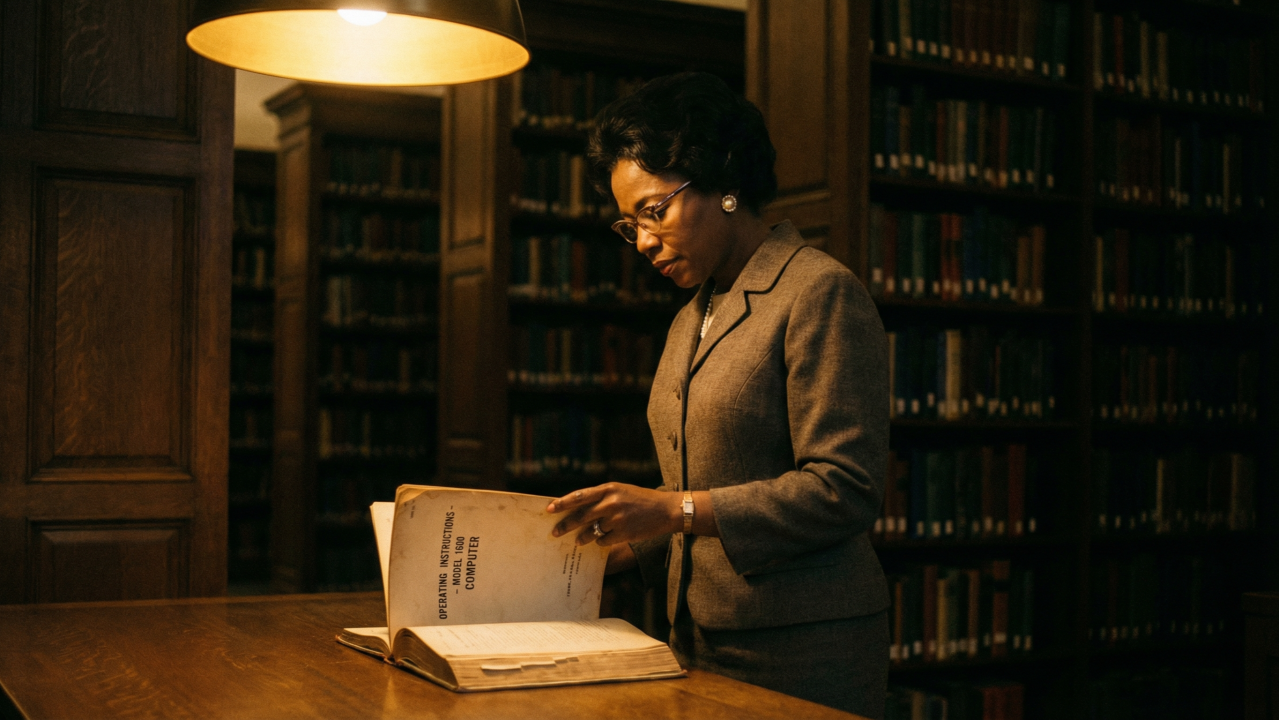
In 1961, Dorothy Vaughan watched them wheel the IBM 7090 into the building.
She knew exactly what it meant. For years, she’d led a team of human “computers” at NASA, women who performed complex calculations by hand, the invisible labor behind America’s space program. The IBM wasn’t there to help them. It was there to replace them.
Dorothy had a choice. She could fight it, deny it, or pretend it wasn’t happening. She could point to the machine’s limitations, its bugs, its confident errors. She could argue (correctly) that human intuition could never be replaced by circuits and punch cards.
Instead, she went to the library.
The Reasonable Objection
Here is a strange thing about technological revolutions: the skeptics are usually right about everything except the conclusion.
The critics of AI have an impressive list of legitimate complaints. The hallucinations are real. The security vulnerabilities are real. The confidently wrong answers are real. Every objection is valid; every concern is justified; every flaw is documented. The case against AI is airtight, except for the small matter of it being irrelevant.
Dorothy’s colleagues could have made an equally airtight case against the IBM. It was expensive. It was unreliable. It required constant maintenance. It couldn’t handle edge cases. All true. All beside the point. The machine was coming whether the case against it was airtight or not.
This is the peculiar tragedy of the reasonable objection: it mistakes accuracy for relevance. The question was never whether the IBM had flaws. The question was whether Dorothy would be in the room when it ran.
What the Machine Couldn’t See
Here is what Dorothy understood that her colleagues missed:
Their expertise was trapped.
Not inferior; trapped. Dorothy’s team had years of experience, hard-won intuition, the tribal knowledge of which calculations to trust and which to double-check. They knew things that couldn’t be written in any manual. Their expertise was real, valuable, and completely invisible to the IBM.
The machine couldn’t read their minds. It could only read their code.
This is the deeper lesson that most people miss about Dorothy’s trip to the library. She wasn’t learning syntax (any clever person can learn syntax). She was learning to translate. To take the invisible expertise of human computers and write it down in a language that both humans and machines could read.
Dorothy didn’t just adapt to the machine. She taught the machine to see what her team already knew.
The Paradox of Usefulness
Here is the paradox that the fearful and the dismissive both miss: Dorothy didn’t become more like a computer. She became more valuable as a human.
The woman who could speak to machines was worth more than the machine itself. Not because she could do what the machine did (she couldn’t, not at scale). But because she could do what the machine couldn’t: she could translate between two worlds.
This is happening again, right now.
The organizations that will thrive won’t be the ones with the cleverest AI. Everyone will have access to that. They’ll be the ones who teach their people to work in ways the AI can see. Not “everyone becomes an engineer.” Everyone becomes a translator.
The banks dismissing AI as a security risk will adopt it; they will have to, because their competitors will force them to. The only question is whether they adopt it as pioneers or as refugees, leading the transition or being dragged by it.
The Window
There is a window, and it is open now.
BCG found that 74% of companies haven’t yet shown tangible value from AI. But the leaders, the ones who figured it out early, expect 60% higher revenue growth by 2027. The gap between the early movers and the late adopters is not narrowing. It is widening.
The skeptics will point out, correctly, that many AI initiatives fail. They will document the hype cycles, the broken promises, the gap between demos and reality. They will be right about all of it. And they will still be standing outside the room when the machine runs.
The problems with AI are being solved. But they’re being solved by the people building with AI, not by the people writing papers about its flaws. The teams that adopted early are developing the guardrails, building the safety systems, learning which use cases work and which require human oversight.
The safety systems of tomorrow are being written by the experimenters of today. The critics are welcome to join them. The alternative is to be protected by systems they had no hand in building.
What Dorothy Knew
Dorothy Vaughan went to the library because she understood something her colleagues didn’t:
The machine wasn’t going away. She could fear it, fight it, or figure it out. Fear and fighting might feel righteous, but they wouldn’t change the trajectory. The IBM was going to run those calculations whether she learned to program it or not.
The only thing she could control was whether she’d be in the room when it did.
She didn’t just save herself. She built a door and held it open for her entire team. She taught them FORTRAN. She made them indispensable: not despite the machine, but because of it.
Twenty years later, she was a legend. The women who refused to learn? History has forgotten their names.
The library is open. The books are on the shelf.
What are you going to do?