Leeloo Dallas, Memorypass
Leeloo learned 5,000 years of human history in ten seconds. Your AI can't remember last Tuesday. So Milla Jovovich built an open-source fix.
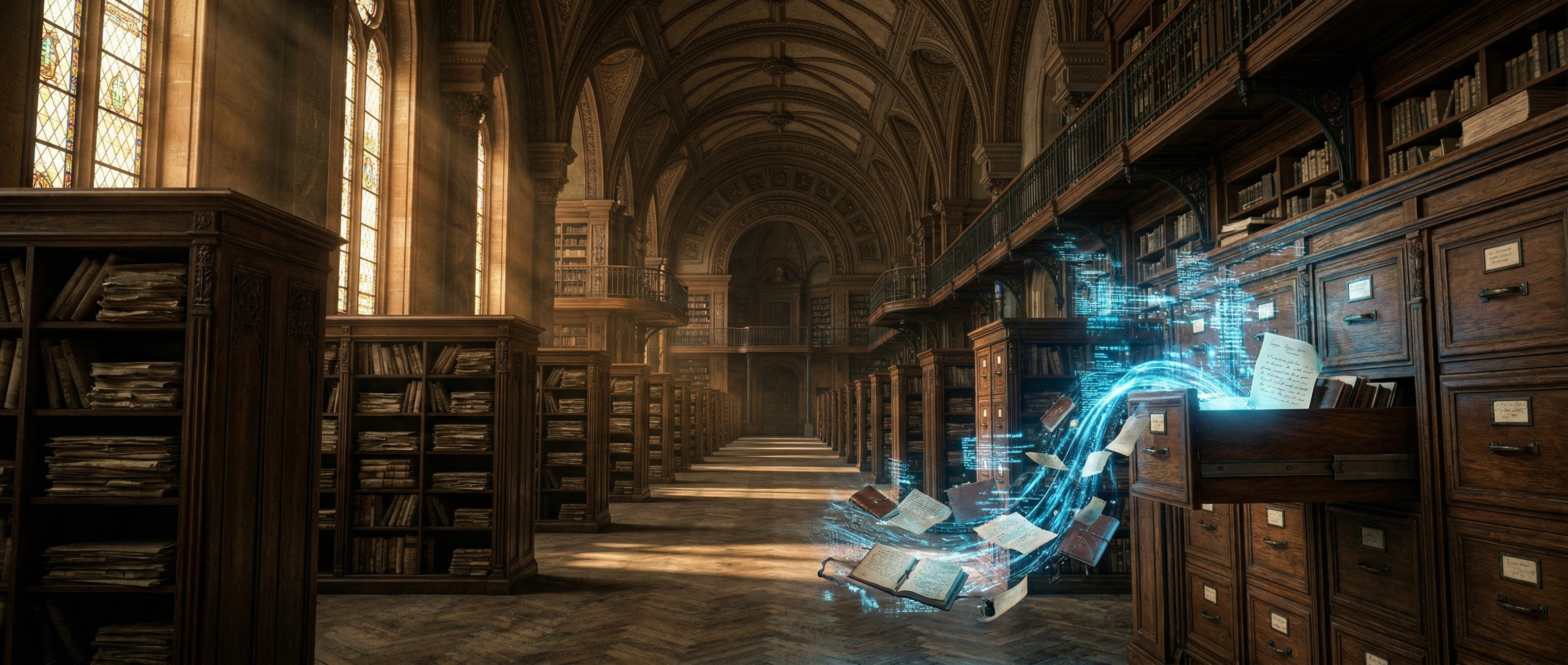
Your AI assistant has amnesia. Not the dramatic kind. The quiet kind. The kind where you explain your architecture on Monday, explain it again on Wednesday, and by Friday you have started prefacing every conversation with a paragraph of context that you privately suspect the machine is ignoring anyway.
This is the most practically frustrating problem in agentic AI, and almost nobody is tracking the cost. Not in tokens. In patience. In the slow erosion of trust that happens when your most capable tool cannot remember what you told it yesterday.
Milla Jovovich, best known as Leeloo in The Fifth Element, just shipped a solution. It is called mempalace. It runs locally, uses a vector database called ChromaDB, costs nothing, and has an architecture that is more thoughtful than anything the major vendors have offered for this problem.
In the film, Leeloo absorbs the entirety of human knowledge in a single sitting. In reality, our AI tools cannot remember what we told them last Tuesday. Jovovich apparently found that gap as frustrating as the rest of us.
The Taxonomy That Works
mempalace organizes memory the way a well-run organization organizes knowledge, which is to say: by who, what, and what kind.
A Wing is who the memory belongs to. A client. A project. A team. A Room is the topic: payments, infrastructure, onboarding. A Hall is the type of knowledge: facts (decisions made), events (milestones reached), discoveries (insights earned), preferences (habits observed), advice (recommendations given).
This taxonomy is not arbitrary. It maps directly to how engineering teams already think. When a senior developer joins your team, they need to learn the client context (Wing), the domain area (Room), and the accumulated wisdom (Hall). This is the institutional knowledge that lives in Slack threads, in the heads of tenured staff, in onboarding documents that are perpetually six months out of date.
The system mines your existing Claude Code conversation transcripts, compresses them into structured memories, and cross-references across projects automatically. Mansel Scheffel, who reviewed it, ran 186 conversations through it and got back roughly 33,000 indexed memories across six projects. It recalled specific debugging sessions from weeks prior with only minor errors.
The entire project is open source on GitHub. For a version one, this is remarkably solid work.
The Amateur’s Advantage
The person who solved this problem was not negotiating with a product roadmap. She was not waiting for the “memory layer” to appear on some platform vendor’s quarterly announcement. She had a problem. AI kept forgetting things. She built a filing cabinet.
This is the advantage of the amateur, in the old and honorable sense of the word: someone who works for love of the thing rather than for the machinery around it. The professional sees the problem and files a feature request. The amateur sees the problem and builds a solution. Both responses are rational. Only one of them ships.
The gap between “I wish this existed” and “I built it” has collapsed to a weekend. Jovovich is not an anomaly. She is a signal. The people closest to the pain are building the fix, and they are not waiting for procurement cycles to do it.
Memory Is Infrastructure
Here is the thing your quarterly planning probably does not account for: memory is not a feature. It is infrastructure.
Every time you explain context to an AI assistant, you are paying a tax. Not just in time, but in quality. An assistant that remembers your architecture, your past decisions, and the reasoning behind them gives fundamentally different responses than one meeting you for the first time.
This connects to something I have been writing about in my Hitchhiker’s Guide series. You cannot specify what you want if the system has already forgotten what you told it last week. You cannot build compounding skill with AI if every session starts from zero. Memory is the substrate on which intent accumulates. Without it, every conversation is a cold start, and cold starts are where the real cost of AI hides.
The vendors will solve this eventually. But “eventually” is doing a lot of heavy lifting in that sentence.
What This Means For Your Team
mempalace is a v1. The architecture is worth studying regardless. Wing/Room/Hall is a multipass for your AI’s memory: the right labels get you through to the right knowledge every time. Start categorizing the knowledge your AI interactions depend on. Who is this for? What domain? What type of knowledge? Even if you use nothing more sophisticated than a well-organized Obsidian vault or a structured CLAUDE.md file, the taxonomy itself will save you hours.
The deeper lesson is simpler. The people building the future of AI tooling are not all in San Francisco. Some of them are actresses. Some of them are musicians. Some of them are sitting in Montreal, solving problems the industry has not gotten around to yet.
The kitchen, as I have noted before, is open. And the most interesting dishes are being cooked by people who never went to culinary school.