The Bookshelf in the Black Hole
Why mastery is now the thing that makes you lost
Your senior engineers’ expertise is aging faster than they can update it.
Not because they lack skill. Because the tools changed while they were using them.
A year ago you wrote code in an IDE. Six months ago you were prompting Copilot. Last month you were orchestrating agents. Next month the stack will shift again. The ways of working that made your team excellent are decaying faster than they can adapt.
This is what it feels like inside a singularity. Andrej Karpathy, who built Tesla’s Autopilot, recently admitted he has never felt more behind as a programmer. If he feels lost, your team does too.
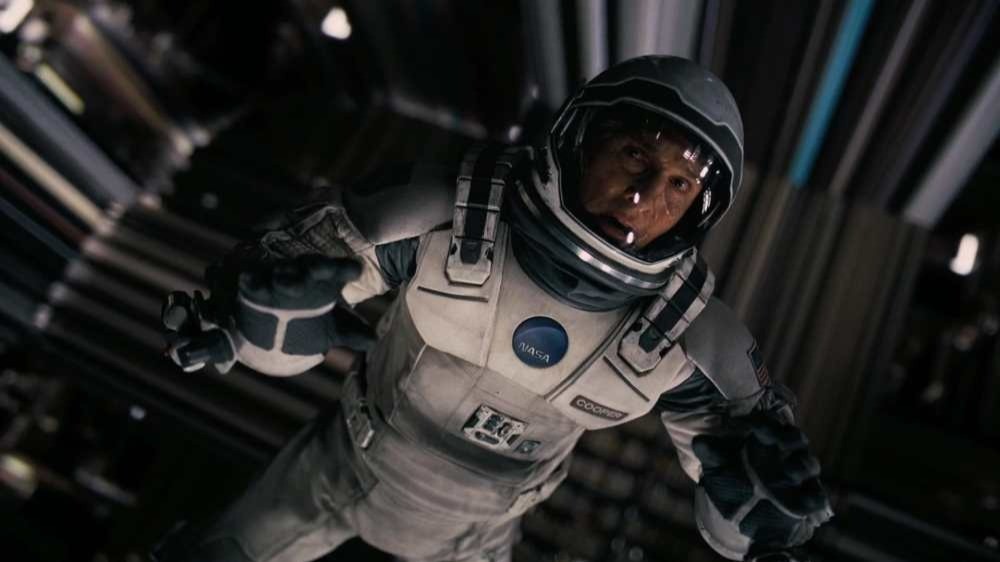
Cooper flew into a black hole. His instruments stopped working. Same problem.
The old job of writing software was predicting outputs. The new job is directing intelligence toward intent.
Brand’s Blackboard
In Interstellar, Professor Brand is the greatest physicist alive. Decades at the blackboard. Every resource aligned to his mission. The gravity equation is solvable, he insists. He just needs more time.
He is lying. Not about the math. About the position.
The data he needs exists only inside a black hole, where gravity bends spacetime so severely that his equations no longer apply. No amount of calculation, performed from the outside, can reach it. Brand could work that blackboard for another century. The answer would never appear.
This is where much of technical leadership finds itself now. Not incompetent. Not lazy. Just standing at a blackboard, working a problem that cannot be solved from where they are.
For most of engineering history, authorship meant authority. You wrote the code, you owned the behavior, you could trace causality from input to output. That model worked for deterministic systems. It does not work for singularities.
The Alien Tool
An LLM is not a better Python library. It is a probabilistic system operating in territory you cannot fully observe. You cannot step through its reasoning. You cannot derive its outputs from first principles. The transformation happens in a space your equations do not cover.
As Karpathy put it: “Clearly some powerful alien tool was handed around except it comes with no manual and everyone has to figure out how to hold it and operate it.” He describes “stochastic, fallible, unintelligible and changing entities suddenly intermingled with what used to be good old fashioned engineering.”
This is not impostor syndrome. This is physics. He also notes this is a “new programmable layer of abstraction to master (in addition to the usual layers below).” The old layers do not disappear. A new one lands on top, and suddenly your stack extends beyond the event horizon.
The more skilled you are at the old paradigm, the more disorienting this feels. Brand spent decades on that equation. His expertise was not the solution. It was the gravity well he could not escape.
A Different Competence
Cooper does not understand the gravity equation. Could not derive it, debate it, or defend it at a conference.
But he flies into a black hole anyway.
This is a different competence. Not calculation, but navigation. Not certainty, but judgment under uncertainty. Cooper does not know what he will find inside. He has no guarantee he will survive. But he has mission discipline: the ability to make decisions in territory where the equations break down, where time itself cannot be trusted.
And he brings tools. TARS, the AI companion, goes with him into the singularity. TARS collects data Cooper could not collect alone. TARS operates in conditions no human could survive. But TARS does not solve the equation. TARS does not decide what matters. TARS extends capability into territory humans cannot reach alone.
The judgment stays with Cooper.
This is AI now. Not a replacement for human judgment, but an extension of human reach. It goes with you into the black hole. It does not tell you what to do when you get there.
Why You Need Both
Here is where most people miss the point.
Cooper enters the singularity and finds the tesseract, a structure where he can see his daughter Murphy’s bedroom across every moment of her life. He can reach through the bookshelf. He can send signals through gravity itself, the one force that transcends spacetime.
But he cannot solve the equation.
He does not know what data she needs. He does not understand the physics. He is an astronaut in a physicist’s problem, pushing books off a shelf, hoping she will understand.
She does.
Murphy grew up to become a physicist, building exactly the discipline her father lacks: rigorous, deterministic, precise. When the data arrives, encoded in the movement of a watch hand, she knows what it means. She translates the signal from the singularity into actionable physics.
The equation was solved not by Brand (who could not enter), not by Cooper (who could not interpret), but by both roles working across the boundary of spacetime.
This is what most organizations miss.
The danger is not that engineers will fail to adopt AI. It is that they will adopt it while abandoning the discipline that made them valuable. They send Cooper into the black hole and fire Murphy.
Deterministic thinking is not obsolete. It is repositioned. Someone must know what “correct” looks like. Someone must validate the signal. The astronaut without the scientist retrieves noise. The scientist without the astronaut never gets the data.
You need both.
What To Do About It
1. Recognize you have a position problem. If your best people are stuck, ask whether the answer is accessible from where they are standing. Brand was the greatest physicist alive. The equation was still unsolvable from his blackboard.
2. Separate exploration from interpretation. You need people who enter uncertain territory, and people who know what correct looks like. Do not collapse these roles.
3. Account for drift. One month not looking equals years of change. The field does not wait.
4. Create permission to be stuck. If Karpathy feels behind, your team does too. This is not failure. It is physics. But as he puts it: “Roll up your sleeves to not fall behind.”
The Tesseract Was Never Alien
At the end of Interstellar, Cooper realizes the tesseract was not built by aliens.
It was built by us. Future humans who evolved enough to reach back through time and help. They used gravity, the one force that crosses spacetime, to send a message: you can do this, but not from where you are standing.
We are building that scaffolding now. AI is not alien. It is human knowledge, externalized, extended into territory we cannot navigate alone.
The organizations that thrive will hold both truths: that deterministic rigor still matters, and that some problems cannot be solved from the outside.
Brand could not enter the black hole. Cooper could not interpret the data.
Together, they solved the equation.
So will you.