Your IDE is a Dead Pixel
The IDE was designed for humans who write code. If agents write the code, the IDE becomes what the light table became to Disney animators.
The IDE was designed for humans who write code. If agents write the code, the IDE becomes what the light table became to Disney animators.
Your IDE is becoming a dead pixel: technically present, functionally useless, impossible to unsee once you notice it.
This isn’t about the death of engineering. It’s about the death of an interface. The IDE was designed for humans who write code, keystroke by keystroke, file by file. If agents write the code, the IDE becomes what the light table became to Disney animators: a beautiful artifact of a craft that moved on.
The Cathedral We Built
We spent decades perfecting the integrated development environment. Syntax highlighting. IntelliSense. Vim bindings for those who wanted to feel like wizards. We built spires of intellisense, flying buttresses of debugger integration, stained glass windows of syntax themes. The cathedrals were magnificent.
And now the pews are emptying.
Not because the congregation lost faith. Because the liturgy changed.
Glen Keane’s Pencil
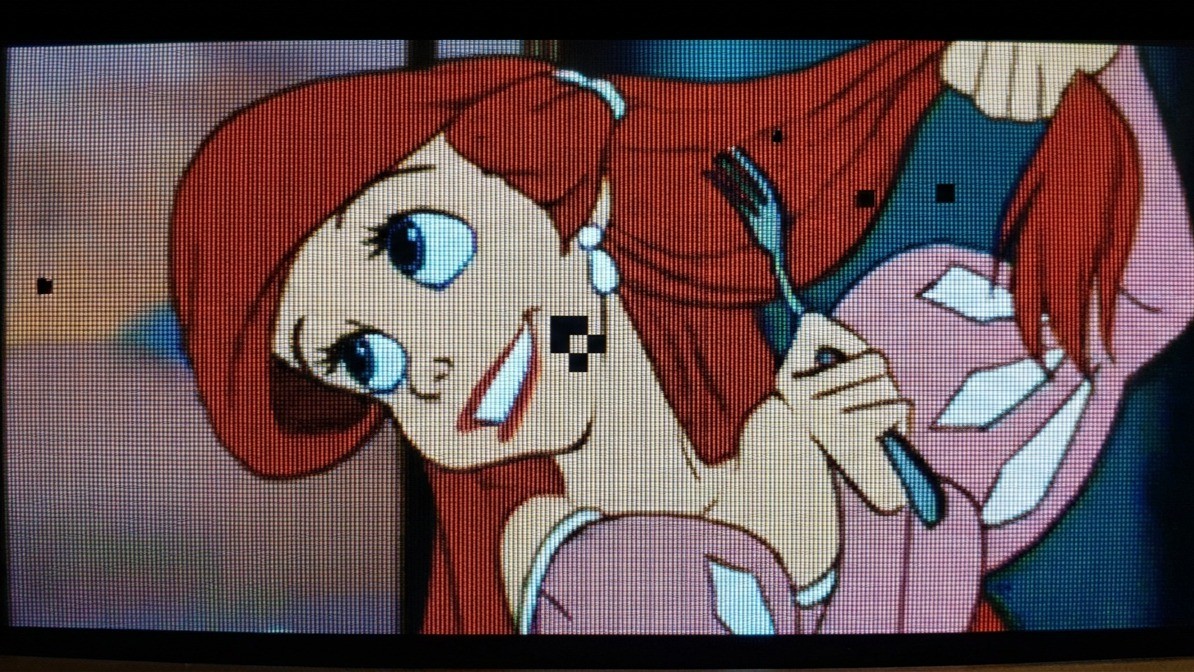
In 1989, Glen Keane animated Ariel brushing her hair with a fork in The Little Mermaid. He’d spent two decades mastering the light table, learning to flip between drawings so fast that motion emerged from stillness. His pencil knew things his conscious mind couldn’t articulate.
Then Pixar made Toy Story. Then Finding Nemo. By 2004, Disney shuttered its hand-drawn Feature Animation building. The light tables went dark.
But here’s what didn’t happen: Glen Keane didn’t become obsolete.
What he did instead was make Tangled warmer than anything Pixar had produced. The 12 Principles of Animation (squash and stretch, anticipation, staging, follow-through) transferred entirely from pencil to pixel. The software couldn’t tell you why Rapunzel’s hair should arc that way in the lantern scene. Keane could. The pencil never made the animator; the animator made the pencil move.
The tool was disposable. The taste was durable.
The Stack That’s Emerging
Daniel Isler puts it with brutal clarity: “You don’t work on your application anymore. You work on the agents that work on your application.”
Read that again. It’s not hyperbole. It’s architecture.
The emerging stack has three layers: a durable Substrate (your data models, your business rules, your domain constraints), an Agentic Layer that interprets and executes, and a Disposable Pixel layer that users actually see. The interface becomes infinitely malleable because the agent regenerates it on demand.
In this world, the IDE sits in the wrong place. It optimizes for human code authorship in an era of agent code generation. It’s like perfecting the light table after computers learned to interpolate frames.
The Paradox of Control
Here’s the inversion: we gain control by giving it up.
The old model was direct manipulation. You typed; the compiler obeyed. You felt in control because your fingers touched every line. But that control was always illusory. You couldn’t hold the whole system in your head. You made mistakes the linter caught, if you were lucky.
The new model is teaching agents to validate themselves. Specialized self-validation hooks aren’t a delegation of responsibility. They’re a multiplication of vigilance. Your agent doesn’t just write code; it checks its own work against the principles you’ve encoded. You trust more by controlling less directly, because the control has become structural rather than manual.
The animator who understood squash and stretch could teach a thousand animators. The engineer who understands domain invariants can teach a thousand agents. The leverage inverts: from doing to teaching, from execution to judgment.
What Survives
The same things that survived the death of the light table:
Domain knowledge. The agent doesn’t know why your financial system treats reversals differently from refunds. You do. That knowledge becomes more valuable, not less, because it’s the constraint that keeps generated code from being merely syntactically correct but semantically catastrophic.
Architectural taste. The agent can produce ten microservices or one monolith. It cannot tell you which decomposition will survive contact with your organization’s actual communication patterns. Conway’s Law doesn’t care about token limits.
The ability to see what’s wrong. Glen Keane could watch a Pixar render and say “the weight is off in frame 47.” Not because he knew the software. Because he knew what weight looked like when a body shifted. Your job becomes knowing what wrongness looks like in systems you didn’t personally type.
Your 12 Principles, whatever they are. Separation of concerns. Single responsibility. Don’t repeat yourself. These survive any substrate. They’re not IDE features. They’re engineering wisdom.
The Concrete Part
So what do you actually do Monday morning?
Stop optimizing your IDE. That new plugin, that custom keybinding, that perfectly tuned linter configuration: it’s rearranging deck chairs. Invest that time in understanding your domain deeply enough to articulate constraints an agent can validate against.
Start building agent hooks. “Specialized self-validation” means your agent catches its own errors before you review them. This isn’t automation; it’s education. You’re teaching, not typing.
Document the why, not the what. The agent can read your code. It cannot read your mind. The ratio of explanation to implementation should invert. Less “here’s the function,” more “here’s why this function must never be called during a settlement window.”
Practice judgment at scale. Review agent output the way Keane reviewed renders. Not line by line (you’ll lose), but shape by shape. Does this decomposition feel right? Is the weight off in frame 47?
The Hopeful Part
We thought the tool made the craftsman. It never did. The craftsman made the tool move in ways that mattered.
Your IDE is becoming a dead pixel because the screen is changing, not because screens are obsolete. The new interface is conversation. The new craft is articulation. The new skill is teaching machines to see what you see.
The animators who survived the light table shutdown weren’t the ones who drew fastest. They were the ones who understood why Ariel’s fork-brush mattered, and could explain it to software that had never been a mermaid.
Glen Keane’s pencil is in a museum now. Glen Keane is still making things move.
Your IDE has the same future. The question is whether you do.